Greg's Blog
Cissie Graham Lynch: How the Church Has Weakened Women
Oct 28, 2026




The world has hurt women in its own ways. But what about the Church?
My friend Cissie Graham Lynch, Billy Graham’s granddaughter and the daughter of Franklin Graham, believes some churches have weakened women by constantly appealing to their emotions rather than giving them what they really need: solid biblical teaching.
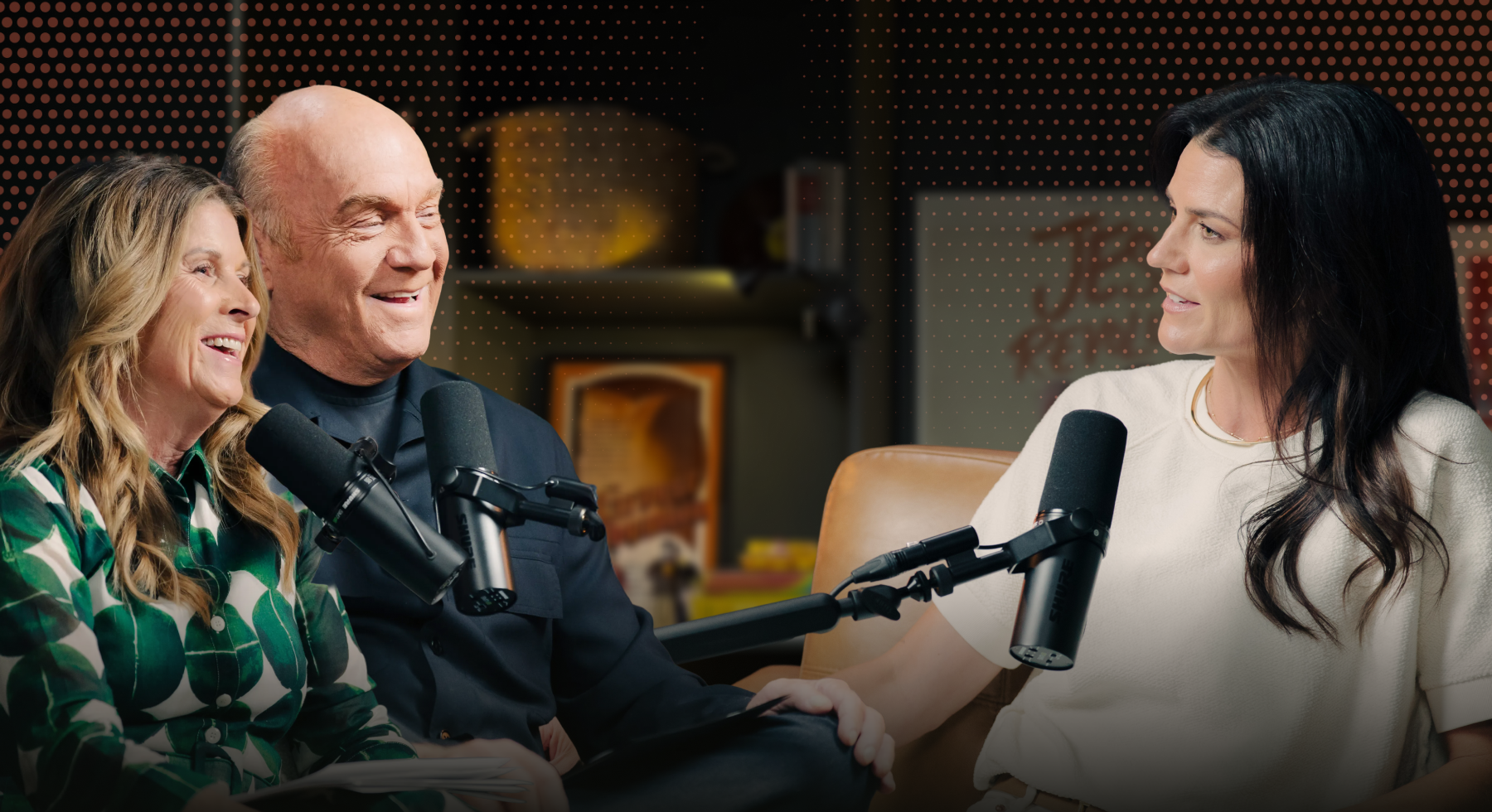
Cissie joined Cathe and I on The Greg Laurie Show to talk about how this problem shows up in ministry—even at Christian women’s conferences. Here’s that part of our conversation.
Greg Laurie: So your mom was a tough cookie, as you said. And so have you been a strong mother as well?
Cissie Graham Lynch: I think I saw these strong women in my life. My grandmother, as you mentioned, the men were gone. My grandfather was gone for months at a time. … [My mom] was a woman of strength. And she was just never afraid of anything. Nothing really shook her. And I saw that just in the women in my life.
And I see this world where I believe the world has lied to women. They’ve sold them this fake, counterfeit version of strength. But I also believe the church has weakened women.
Greg Laurie: Kind of the girl boss from the culture. Like, girls are superheroes. Girls can beat men in fights. Like, come on. But then in the church, it’s this therapeutic, emoting feeling.
Cissie Graham Lynch: Bonding over traumas all the time. And so that was really kind of the heartbeat behind [my book, Stand Steady].
Cissie Graham Lynch: And I don’t mean that—not all churches. There’s great, wonderful women’s ministries that are really teaching the solid Word of God.
But as I mentioned, I would go to these conferences and there was very little Bible teaching. It was all emotional. Women are crying around me and bonding. I’m like, I’m not feeling it. I have no emotion. I just want to study the Word of God. I’m here. I’m hungry. I’m thirsty for it.
Cathe Laurie: I feel like in life emotions run this deep, but there has to be a truth that is deeper than our emotion. We have to know when we’re feeling certain things—even if it’s a love for the Lord or a good emotion of love or worship or whatever—to recognize what is emotion and what is truth.
And are you willing to worship when you’re not feeling it? Are you willing to obey when you don’t necessarily feel the motivation or the reward at the end of that? But you know it’s right. So you have to have that deeper than emotion. And absolutely, the church needs to equip women with that.
Cathe Laurie: And the idea of bringing women together to rehearse their past traumas … very early on in my ministry, there was a speaker who went around and she had been abused. She had gone through some trauma in her youth and that became her whole platform.
But what I saw was a red flag for me when I started reading more deeply was she started listing all these symptoms, that were very vague symptoms, that could mean that you were also abused.
… And I found that … there was no resolution or victory. The only way through this was to continue to dig deeper into your past memories, into your history of hurt and trauma. … The fruit that I saw as a result of that wasn’t taking those things to the cross and taking them to our Healer and taking them to the Word of God. It was just this perpetual cycle of hurt and rehearsing.
And whenever we get in small groups, it can happen. As we’re discussing the Word of God, one starts saying this, the next [starts saying this]. … You have to kind of wrangle all of that back. You say, “Okay, girls, that’s very interesting. We all have experiences. We all have memories. But remember, we’re here to study God’s Word.” Bring them back to that.
But yes, emotions and feelings, they’re this deep. And they are not to be trusted because you can flip your emotion in a day. For us women, it can be hormonal. It can be, we read something, we saw something, a friend didn’t invite us to the party. All of a sudden it’s like the world is ending. And young girls in particular now with social media, it is really, really hard for them.
Greg Laurie: What alarms me is there’s a story out right now about a young girl, just turned 13 years old, raised in a Hollywood home, and she took her own life. Suicide among young girls has, like, tripled. … I think you can almost trace it back to when the social media platforms were born.
And I think we can dismiss the pain that these young girls are feeling, but it’s real to them. Maybe they’re being bullied online, or they don’t feel they measure up. What would you ladies say to the younger girls out there?…
Cissie Graham Lynch: I was growing up in the ’90s and early 2000s, which was the time of supermodel thin and the pressure to be bone skinny. … I talk about that in my book a little bit—my eating disorder that I’d had for years that kept me just in bondage. … I really can’t fathom, with the world of social media, what these young girls are facing.
I would first start with the parents. The world won’t understand when you don’t want to give your child a phone. There’s going to be pressures. The kids can say, “No, I can’t do this. You’ve got to give me a phone or I can’t go to this practice. …” There’s so many pressures and reasons. And it’s easier to give in to some of them. But it’s not too late to rein it back in with our children, to really set closer boundaries and standards for our families and more rules. And it won’t make sense. And your kid might be mad at you. It’s okay.
Cathe Laurie: You’re not their best friend. You’re their parent.
Cissie Graham Lynch: So look at parents first to rein it back in. Protect them. Keep them safe. That’s your job—to protect your child.
Cissie Graham Lynch: But boy, I look at those little girls and their worth is not in the words of other people. Their worth is not in social media and this comparison world where we’re constantly comparing our lives and complaining about what we have and don’t have. They are in a battle. And we’re in a battle for our children, and the heart and souls of our children right now.
Cathe Laurie: I think kids are so isolated today. And I think parents are distracted as well as the kids are, that no one’s really paying really careful attention when you start seeing these warning signs.
But as in every life, we have value. We have purpose. We have gifts. God loves us. He wants to use us. We have a beautiful future that God has designed for us that’s unique.
And so for me, what I would love to see every young child, starting from the time they’re very little, is to recognize they have sources of strength in their life that is not based on what social media or the current trends or culture is telling them. … But they would know that they have a family … parental love … no matter what. And then second of all, church, the community of God’s people. …

To help you get started, we would love to send you a free Bible and other resources to help you grow in your faith.
Get Resources